

Charge It!
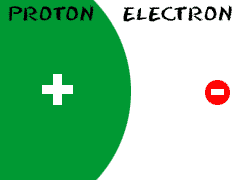 Electrons are the negatively charged particles of atom. Together, all of the electrons of an atom create a negative charge that balances the positive charge of the protons in the atomic nucleus. Electrons are extremely small compared to all of the other parts of the atom. The mass of an electron is almost 1,000 times smaller than the mass of a proton.
Shells and Shapes
Electrons are found in clouds that surround the nucleus of an atom. Those clouds are specific distances away from the nucleus and are generally organized into shells. Because electrons move so quickly, it is impossible to see where they are at a specific moment in time. After years of experimentation, scientists discovered specific areas where electrons are likely to be found. The overall shape of the shells changes depending on how many electrons an element has. The higher the atomic number, the more shells and electrons an atom will have. The overall shell shape will also be more complex (because of the suborbitals) as you have more electrons.Creating Bonds
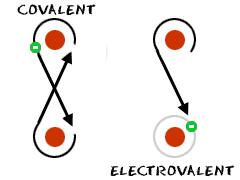 Electrons play a major role in all chemical bonds. There is one type of bonding called electrovalent bonding (ionic), where an electron from one atom is transferred to another atom. You wind up creating two ions as one atom loses an electron and one gains one. The second type of bonding is called covalent bonding, where electrons are actually shared between two or more atoms in a cloud. Both types of bonds have specific advantages and weaknesses.
Power Up!
Electrons are very important in the world of electronics. The very small particles can stream through wires and circuits, creating currents of electricity. The electrons move from negatively charged parts to positively charged ones. The negatively charged pieces of any circuit have extra electrons, while the positively charged pieces want more electrons. The electrons then jump from one area to another. When the electrons move, the current can flow through the system.Related Video...
The Radiation Belt Storm Probes (Science@NASA Video)
- Overview
- Structure
- Orbitals
- Electrons
- Ions
- Neutrons
- Isotopes
- Bonding
- Compounds
- Compound Names
- Advanced Ideas

 See the full list of chemistry topics at the site map!
©copyright 1997-2018 Andrew Rader Studios, All rights reserved.
Current Page: Chem4Kids.com | Atoms | Electrons
** Andrew Rader Studios does not monitor or review the content available at external web sites. They are paid advertisements and neither partners nor recommended web sites. Also, we do not collect or ask for personally identifiable information on any of our sites. Privacy Policy/Terms & Conditions